
Yamaha Acompass 60
acoustic guitar amplifier

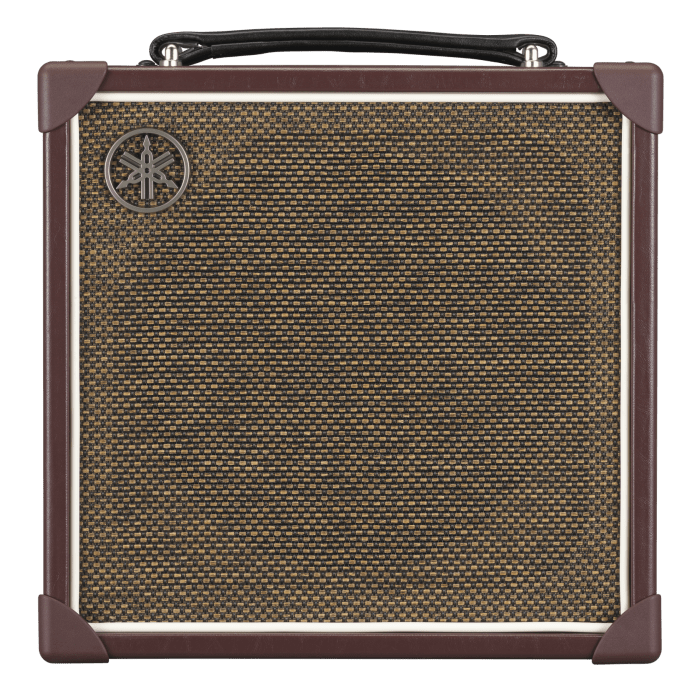
60-watt acoustic amplifier with an 8-inch full-range speaker
D-PRE Class-A preamps for vocals and guitar
AMBIENCE for natural acoustic guitar resonance
Individual effects and automatic feedback suppression
Bluetooth audio and balanced XLR LINE OUT
Klundertmusic.nl will come back on your offer within 1-2 working days
Want to know when this item is back in stock? Send us your email address and we'll notify you as soon as it's available!
Our product experts are happy to help you!
The Yamaha Acompass 60 is a premium 60-watt acoustic guitar amplifier, designed for singer-songwriters and solo artists who want to amplify their vocals and acoustic guitar in a natural way. Thanks to Yamaha’s expertise in acoustic guitars and professional PA systems, the Acompass 60 delivers a balanced reproduction of both vocals and guitar. With two independent channels, high-quality D-PRE Class-A preamps, an 8-inch full-range speaker, and extensive tone control options, this compact amplifier provides a complete solution for acoustic performances.
While many acoustic guitar amplifiers focus primarily on amplifying the guitar, the Yamaha Acompass 60 gives equal attention to the vocal. Under the motto “True Acoustic Voice,” faithful reproduction is key, preserving the musician’s tone and dynamics. From living room concerts and café performances to smaller stages: the Acompass 60 combines Yamaha’s sound quality with intuitive controls, so you can focus entirely on your music.
True Acoustic Voice – natural reproduction of vocals and guitar
The Yamaha Acompass 60 is designed to reproduce the character of an acoustic guitar and the nuances of the human voice as faithfully as possible. To achieve this, Yamaha has tuned both the speaker and the cabinet to the specific characteristics of acoustic instruments and vocals. The built-in 8-inch full-range speaker, combined with the 60-watt amplifier system, delivers a clear, balanced sound with sufficient volume for small-scale live performances. At the same time, the clarity of both vocals and guitar is preserved, allowing both sound sources to shine. The result is an amplifier that not only supports the acoustic guitar but also functions as a full-fledged amplification system for the voice. This creates a cohesive sound where vocals and instrument complement each other.
D-PRE Class-A preamps for both channels
A key feature of the Yamaha Acompass 60 is its two built-in D-PRE Class-A preamps. This preamp technology was originally developed for Yamaha’s professional recording equipment and is used on both the GUITAR channel and the VOCAL/INST channel. The D-PRE preamps are designed for precise signal processing, preserving the dynamics and tonal characteristics of the connected sound source. As a result, both the acoustic guitar and the vocal microphone benefit from transparent amplification. Both channels feature their own gain control and an input selector switch, allowing the input signal to be tailored to the connected instrument or microphone. On the guitar channel, you can choose between HIGH and LOW, while the second channel has a VOCAL/INST selector. In addition, both channels feature separately switchable phantom power, allowing you to connect suitable condenser microphones.
[[READMORE]]
Two independent channels with their own tone controls
The Acompass 60 features two channels that can be set independently. The GUITAR channel is optimized for acoustic guitars, while the VOCAL/INST channel is suitable for vocal microphones and other instruments. Each channel has its own 3-band equalizer with BASS, MIDDLE, and TREBLE controls. Yamaha has optimized the EQ characteristics for the different sound sources, so you can achieve the right sound with just a few adjustments. The guitar channel also features AMBIENCE, while the vocal/instrument channel is equipped with a compressor. Both channels have their own ENHANCER function and a separate REVERB control. Thanks to this layout, you can, for example, give the guitar more warmth and resonance, while better balancing the vocals with compression and reverb. The controls are directly accessible via the amplifier’s top panel.
AMBIENCE – Restore the Natural Resonance of Your Acoustic Guitar
Many electro-acoustic guitars use a piezo pickup. Although these pickups are suitable for live use, the amplified sound can sometimes sound harsh, sharp, or less natural than the unamplified guitar. The AMBIENCE function on the Yamaha Acompass 60 was developed to minimize this difference. This function adds the characteristic body resonance and spatial depth of an acoustic guitar to the amplified signal. This restores more of the acoustic character that can be lost with a direct piezo output. A single knob lets you control how much AMBIENCE is added, so you can tailor the amount of resonance to your guitar and playing style. This feature is particularly useful for guitarists who use an electro-acoustic guitar with a conventional piezo pickup. On Yamaha guitars equipped with an Atmosfeel pickup system, it is recommended that you turn off the Mic Blend control on the guitar when using AMBIENCE. Since both systems affect acoustic resonance, setting both too high can result in excessive bass response.
ENHANCER – More Clarity and Definition
The Yamaha Acompass 60 features a separate ENHANCER function on both channels. This function is designed to make details in the high frequencies and natural overtones more audible. With acoustic guitars equipped with a piezo pickup and certain vocal microphones, subtle tonal details may be less clearly reproduced during signal transmission. ENHANCER helps restore these characteristics and provides greater definition in the sound. For guitarists, this means that string attacks and overtones can come through more clearly. For vocals, the function can contribute to better intelligibility and a more open soundstage. The ENHANCER can be activated with a single push of a button, without the need for extensive settings.
COMP – Controlled and Present Vocals
For the VOCAL/INST channel, Yamaha has integrated a compressor that can be adjusted with a single knob. The COMP function helps manage differences between soft and loud vocal passages. This keeps the voice more audible and creates a more consistent sound level, without the singer having to constantly adjust the volume. This is especially helpful for singer-songwriters who switch between subdued vocals and more powerful passages during a performance. The compressor supports the dynamics of the voice and helps keep the vocals comfortably balanced with the guitar. The controls have been deliberately kept simple: a single knob lets you set the amount of compression, without separate settings for attack, release, or ratio, for example.
REVERB – Add a Natural Sense of Space to Vocals and Guitar
The Yamaha Acompass 60’s built-in REVERB givesvocals and acousticguitar a sense of space and depth. Both channels have their own reverb control, allowing you to adjust the amount of reverb separately. For example, you can add a subtle sense of space to the guitar and give the vocals a slightly more spacious reverb. The reverb is designed to blend vocals and guitar into a cohesive whole. This creates a natural sound that works well for acoustic performances. Each channel is controlled via a rotary knob, allowing you to adjust the amount of reverb during a performance.
Automatic Feedback Suppressor When amplifying acoustic guitars and vocal microphones, unwanted feedback can occur, especially when the volume is turned up or when the musician is standing close to the amplifier. The Yamaha Acompass 60 therefore features an automatic FEEDBACK SUPPRESSOR. This function detects and suppresses unwanted feedback, reducing the risk of feedback. The feature can be activated with a single press of a button and operates automatically. This eliminates the need to manually search for problematic frequencies. As a result, the Acompass 60 is ideal for situations where a quick setup is essential, such as small stages, cafes, rehearsal spaces, and living room concerts.
Simple operation without an app
When developing the Acompass 60, Yamaha opted for direct control via physical knobs and switches. All key functions are accessible via the control panel on the amplifier. From input levels and equalizers to effects and master volume: you can adjust the entire sound setup without a smartphone, tablet, or external software. The separate controls for guitar and vocals allow you to adjust both signals independently. The MAIN control sets the overall output volume, while the AUDIO control is used for the playback volume of external audio sources. This setup allows you to quickly configure the amplifier and make adjustments on the fly during a performance.
Bluetooth and AUX for External Audio Sources
In addition to the two instrument and microphone inputs, the Yamaha Acompass 60 features Bluetooth audio and an AUX input. Via Bluetooth, you can wirelessly play music from a smartphone or tablet, for example. This is useful for playing backing tracks, accompaniment music, or music during breaks. The AUX input allows you to connect an external audio source using a 3.5 mm stereo mini-jack cable. The separate AUDIO volume control lets you adjust the playback level of these audio sources independently of the settings for the guitar and microphone channels.
XLR LINE OUT for PA Systems and Recording
The Yamaha Acompass 60 can be used not only as a standalone amplifier but also connected to an external PA system or recording equipment. The balanced XLR LINE OUT allows you to send a mono line signal to, for example, a mixing console, audio interface, or active speaker. This lets you use the Acompass 60 as a personal amplifier on stage, while the sound is also played back through a larger sound system. The LINE OUT has a fixed output level that is independent of the MAIN volume control. This allows you to adjust the volume of the built-in speaker without changing the signal level sent to the external equipment. In addition, the amplifier features a GND/LIFT switch that helps reduce hum and ground-related interference in the signal path.
Headphone Jack and USB-C for Firmware Updates
For practicing without using the built-in speaker, the Acompass 60 is equipped with a 6.35 mm stereo headphone jack. As soon as headphones are plugged in, the built-in speaker is automatically turned off. This allows you to listen to your guitar and vocals without them being played through the speaker. There is also a USB-C port on the rear panel. This is intended exclusively for firmware updates and does not function as a USB audio interface.
Compact Enclosure for Performances and Rehearsals
Measuring 30 x 30 x 31 cm and weighing 8.2 kg, the Yamaha Acompass 60 is designed to be easily transported to rehearsals and performances. The compact enclosure features an integrated handle and houses the specially tuned 8-inch full-range speaker. The combination of the enclosure, speaker, and amplifier technology is designed to deliver a balanced reproduction of acoustic guitar and vocals. The Acompass 60 runs on AC power and does not have a built-in battery. With this design, Yamaha is primarily targeting indoor use, such as in cafes, smaller venues, rehearsal spaces, and living room concerts.
Thanks to its compact size, two independent channels, and built-in effects, the Acompass 60 offers a complete amplification solution for musicians who perform with an acoustic guitar and a vocal microphone.
Yamaha Acompass 60 features:
- premium acoustic guitar amplifier for singer-songwriters and solo artists
- 60-watt output power
- 1x 8-inch full-range speaker
- True Acoustic Voice for natural reproduction of vocals and acoustic guitar
- Two independent channels: GUITAR and VOCAL/INST
- D-PRE Class-A preamp on both channels
- Combined XLR/jack inputs for guitar and microphone/instrument
- Switchable HIGH/LOW input sensitivity on the guitar channel
- Switchable VOCAL/INST input mode on the second channel
- Separate gain control per channel
- 3-band equalizer per channel with BASS, MIDDLE, and TREBLE
- ENHANCER function on both channels for greater clarity and definition
- AMBIENCE function on the guitar channel for natural acoustic resonance
- Adjustable compressor on the VOCAL/INST channel
- Separate REVERB control for both channels
- Automatic FEEDBACK SUPPRESSOR to prevent unwanted feedback
- Individually switchable phantom power for both channels
- Bluetooth for wireless audio playback
- 3.5 mm stereo AUX input for external audio sources
- Separate AUDIO volume control for Bluetooth and AUX
- MAIN volume control for overall speaker and headphone volume
- Balanced XLR LINE OUT for connection to PA systems and recording equipment
- Fixed LINE OUT signal level, independent of the master volume
- GND/LIFT switch for reducing hum and interference
- 6.35 mm stereo headphone jack with automatic speaker mute
- USB-C port for firmware updates only
- Power supply: 100–240 V AC, 50/60 Hz
- Dimensions (W x D x H): 30 x 30 x 31 cm
- Weight: 8.2 kg
In thebox: power cord, user manual, safety instructions, and service information
| Brand | Yamaha |
|---|---|
| Ean Code | 4957812721387 |
| Power (Watt, RMS) | 51 - 100 Watt |
| Enclosure | other |
| Bluetooth audio | yes |
| Number of mic inputs | 2 |
| Number of instrument inputs | 2 |
| Fantoomvoeding | yes |
| Diameter | 8" |
| Battery operated | no |
| Number of speakers | 1 |
| Article number | 77100 |
| Size (product) | 30 cm x 30 cm x 31 cm |
| Size (packaging) | 38 cm x 38 cm x 43 cm |
Yamaha Acompass 60 | Akoestische gitaarversterker voor singer-songwriters
The Yamaha Acompass 60 is a premium acoustic guitar amplifier, specially designed for solo artists and singer-songwriters. Thanks to Yamaha’s expertise in acoustic guitars and professional audio technology, vocals and guitar are amplified with exceptional fidelity, while preserving their unique tonal character.
From intimate acoustic performances to smaller stages, the Acompass 60 delivers your “True Acoustic Voice” with a clear, natural sound and intuitive controls. This allows you to focus entirely on singing, playing, and performing.

 Blog
Dat verschillende houtsoorten een andere klank produceren is waarschijnlijk niet nieuw voor je. Maar wat voor klank bij welke houtsoort hoort, dat leggen we je graag even uit!
Read more in our blog